

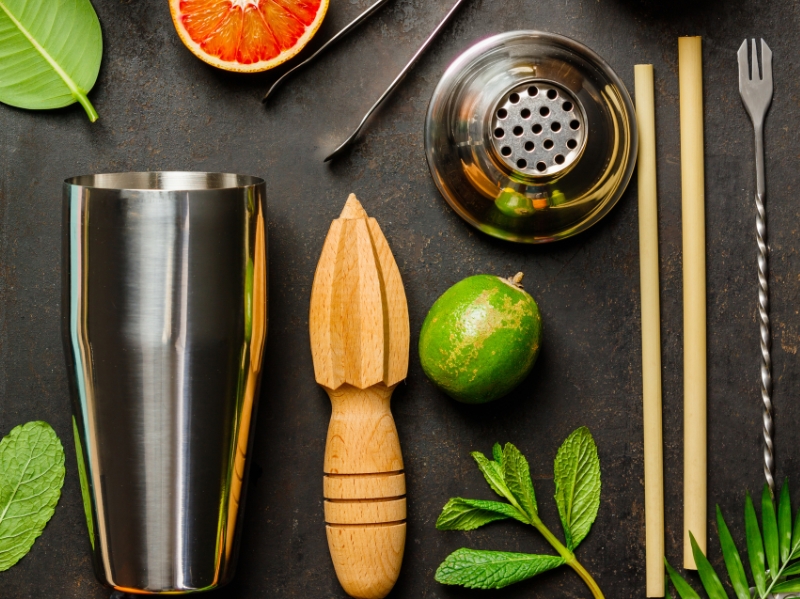
Tiki cocktails are often branded as complex and difficult. This is often attributed to them having many ingredients. While that can make them more challenging, the real issue is that many ingredients are rather unique and only featured in a couple cocktails. Understanding many of the most common (or not so) ingredients in tiki cocktails can help to understand what makes them so delicious.
The use of ingredients is organized the same as the Build A Tiki Bar tool:
Alcohol | Citrus | Flavors & Sweeteners | Additions
Rum
You can find the Casual Tiki Recommendations when you Build A Tiki Bar, or you can use the Minimalist Tiki Rum Category Reference.
- Lightly Aged/Filtered Rum is more commonly known as white rum. Personally, I use El Dorado 3 and a Hawaiian brand, just because it is light and I like the idea of supporting a Polynesian island, but I acknowledge it is not traditional tiki.
- Moderately Aged Rum is more commonly known as gold or black rum. Personally, I use Gosling’s Black Seal, Chairman’s Reserve Original and a Hawaiian brand that is not traditional tiki.
- Aged Jamaican Rum is a very traditional tiki rum and frequently used in the classic Mai Tai. It is usually “funky” with an overripe banana flavor, but like all rums you can find some where the flavor varies. Personally, I use Worthy Park 109 and Smith and Cross. Minimalist Tiki does state that Smith and Cross, due to its strength, is technically overproof – but it is delicious. I prefer to use both of these rums when a recipe calls for it. Try a 3-1 mix of Worthy Park and Smith and Cross (75% to 25%) as it provides a funk from Smith and Cross, but in smaller quantities.
- Overproof Demerara Rum is used occasionally, but not as often as the first three. These are incredibly powerful, alcohol heavy liquors and carry the 151 label. I currently (and rarely) use Hamilton 151.
- Aged Demerara Rum is used even less frequently than Overproof Demerara Rums. These rums are from a specific area in Guyana. Due to the rather infrequent use, I only own one, El Dorado 5.
- Aged Agricole Rum is used about as often as Aged Demerara Rum, which is not a lot. It comes from Martinique and Guadeloupe, French Islands. Similar to Aged Demerara Rum, I own only one – Clement VSOP.
NOTE: Do not hesitate to explore your own rum choices. That is part of the fun. I have settled on some options that I truly enjoy and recognize my limited space. But, the Build A Tiki Bar tool does offer upgrading options that can provide an array of different flavors and experiences for you to try.
Citrus
Citrus/acid is a key part of almost any cocktail. Tiki is no different.
- Lime juice is a staple in tiki cocktails. Its acidity and tartness balances the sweetness and brightens the flavors. Fresh-squeezed is always preferred, but that is universal for cocktails, even outside of tiki.
- Lemon juice is not the most common ingredient in tiki, but close. It provides subtler citrus note that adds complexity and keeps things refreshing. Fresh-squeezed is always preferred, but that is universal for cocktails, even outside of tiki.
- Orange juice is another common citrus used in tiki. While the juice by itself is not the most popular, it certainly climbs when you consider the other orange flavors used in drinks. It provides a subtle citrus note to tiki drinks, balancing sweetness and offering complexity.
- Pineapple juice is a common citrus used in tiki cocktails. It provides a unique sweetness and acidity that offers a tropical flavor. Hard-core enthusiasts and bars will opt for fresh-squeezed pineapple juice, but canned (not from concentrate) is generally accepted.
- Grapefruit juice has a tartness that can elevate tiki drinks, providing a tangy contrast to the sweetness and richness of other ingredients.
- Orange liqueur is a fairly common in tiki cocktails and home bars. Grand Marnier is a more common base-bar liqueur, but not in tiki. Dry curacao is far more common (think of the Mai Tai). But, this category is busy as it also includes triple sec and Campari (for the very popular Jungle Bird). Some recipes directly call for Cointreau, but it is essentially a fancy triple sec.
- Apricot liqueur is one of my all time favorites. Probably because it has a starring role in my favorite tiki drink, the Tradewinds. It can adds the flavor of stone fruit and aroma to tiki drinks, offering a unique twist on the usual tropical fruit flavors.
Flavors & Sweeteners
- Grenadine is a common ingredient in cocktails, not just tiki. In many drinks it can provide a red hue and a touch of sweet pomegranate. It is used for both flavor and appearance.
- Simple syrup is sugar water to add sweetness. It is a common bar ingredient.
- Demerara syrup is simple syrup made with demerara sugar from Guyana.
- Honey syrup is simple syrup made with honey.
- Cinnamon syrup is a simple syrup with cinnamon.
- Vanilla syrup is a simple syrup with vanilla flavoring.
- Coffee liqueur can be many things coffee flavored. I use a Hawaiian Coffee Rum. It can add a depth in flavor and a traditional coffee bitterness.
- Coconut cream is used in several cocktails. Many will choose a canned coconut cream for their drinks that can also act as a fun glass for their cocktail.
- Orgeat is an almond flavored syrup. Some may contain alcohol. It can taste like marzipan with a hint of floral orange blossom.
- Passionfruit syrup or juice is one of the more controversial decisions I made. You can swap them out by recognizing the syrup is more potent than a juice.
- Blue curaçao is a type of citrus liqueur, but it is more typically used for its artificial bright blue coloring.
- Falernum/Allspice Dram are spice-filled (not hot) liqueurs with almond, allspice and other flavors. However, Allspice Dram is typically stronger than Falernum, but it is possible to use them interchangeably with minor modifications.
- Cherry liqueur is a family of liqueurs that can be broad. They have cherry-ish flavoring depending on the brand. Most tiki cocktails call for a maraschino liqueur or cherry herring.
- Donn’s Mix is a custom mix from Donn Beachcomber. It is, essentially, a mixture of grapefruit juice and cinnamon syrup.
- Benedictine is an herbal liqueur from France. It has a complex flavor palette.
- Blackberry brandy is what it sounds like, blackberry flavored brandy.
Banana liqueur is what it sounds like, a banana-flavored or infused liqueur that is popular in a few tiki drinks.
Additions
- Ginger beer is a common bar ingredient and used occasionally in tiki or tiki-adjacent cocktails.
- Club soda is a common bar ingredient and used occasionally in tiki or tiki-adjacent cocktails.
- Egg white is used sparingly in tiki.
- Nutmeg is a spice used in a few cocktails to add warmth and depth to the drink.
- Angostura bitters are used frequently in tiki. They can add bitterness, aroma and complexity to cocktails.
- Mint leaves (and sprigs for garnish) are frequently used in tiki. The fresh flavor of mint builds character into the cocktail.
- Brandy/Cognac is a liquor that is used in several tiki cocktails, but as an additional flavor and not usually a key alcohol.
- Herbsaint/Pernod/Absinthe are three distinct, but similar high-alcohol additions.
- Bittermens mole bitters are not used frequently, but provide a distinct flavor and aroma.
- Sherry wine is a strong wine that is occasionally used in tiki cocktails – sometimes as a floater.

Leave a Reply