

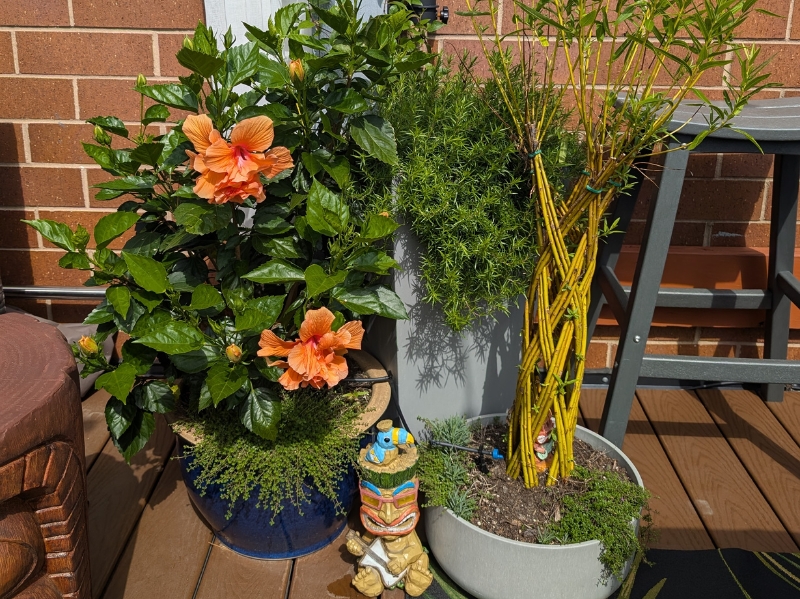
USDA Zone 10-11 | Flowering Bush
Learn more at Creekside Nursery.
Hibiscus plants are perfect for any outdoor space looking for a tiki or tropical flair. If properly cared for, hibiscus flowers multiply rapidly and create stunning tropical landscapes.
Despite living in Chicago (technically Zone 6), I pay up every year to have a few Hibiscus in my garden. Beyond their beauty, they have a bonus use: almost all hibiscus flowers are edible. While I don’t advocate eating them, it does mean they work well as garnishes for cocktails and dishes. They provide an instant sense of Hawaiian paradise.
Many Hibiscus
There are many types of hibiscus plants available. For example:
- Tree or Bush
- Single or Twisting Tree
- Color Options
- Styles & Types
Many of us likely just see an amazing looking plant that fits a tropical theme and picks it up. That is perfectly fine. They are all beautiful, assuming you properly care for them.
2024: The Year of the Bush
This year I decided to go with a hibiscus bush, after having hibiscus trees the past two years. I was looking to go with a bit of a shorter design style and I’ve been incredibly happy. In particular, I chose the Double Peach Hibiscus Bush. Since I order online, I may not always get what I expect. A few of my bushes decided to go rouge and produce some stunning red colors as well. I’m not complaining.

Locate for Sun
As a flowering plant, hibiscus need plenty of sunlight. While I have seen reports of them receiving too much sun, this isn’t something I have experienced. My five plants receive full sun all day on a rooftop and thrive. If you do experience leaf burning, I would advise a location that enjoys some shade in the afternoons when its warmest.
Water Regularly
Next, you’ll want to water regularly. While most hibiscus do not like regularly moist soil, they do love water. If the top of the soil is dry, they could use some water. This is particularly true if you are like me and have them planted in containers. Containers will dry out much faster than ground soil.
Fertilize
All flowering plants can benefit from fertilizer. Again, even more if you are planting in containers. While you can purchase fertilizer specifically for tropical plants, I have stopped doing this. I find the pellets that arrive never actually break down and end up with a pot full of small green balls.
I simply use the same fertilizer I use for all my flowering plants – Jobe’s Fertilizer Stakes. I will give each hibiscus container two stakes every 3-4 weeks. This seems to be a sweet spot for them.
Deadhead the Flowers
I’m not talking about the Grateful Dead followers, but I am talking about cutting the spent flowers off the plant. By cutting the dead flowers off it will promote even more blooms on these plants.
I try to be proactive about this process by deadheading the wilting flowers every evening.
Short Bloomspan
Hibiscus flowers are so prolific they have a short bloom life. My blooms, once you start to see color, have less than 24 hours left. It is one reason I’m rather proactive. By deadheading blooms that are starting to wilt, the plant can focus on new blooms for the next day.
If you can cultivate this for a few days in a row, you can prep your bushes to be particularly spectacular for that big tiki party or having guests over (for drinks or decor depending on the purpose).
Signs of Trouble
A downside of hibiscus is they can be finicky, but they’ll send up warning signs quickly. Here are a few:
- Multiple yellow leaves (watering or fertilizer)
- Not flowering (watering, fertilizer, pests, disease)
- Falling buds (wind, watering or fertilizer)
- White powder on leaves (fungus)
- Dead/brown buds (pests, disease)
Each of these could have its own cause, but here a few considerations:
- Too much water or not enough water
- Too much fertilizer or not enough fertilizer
- Fungus or disease (consider a fungicide)
- Pests (my number one are ants and I spray them with insecticide)
Like I said, hibiscus can be finicky and identifying the issue can be challenging. I really struggled with them my first year, but they feel easy now.
Do Not Consume
If your plants are actively experiencing pests, disease or fungus OR If you are spraying your plants with an insecticide or fungicide, be sure to not use them as edible flowers in cocktails or dishes. A few days and the issue seems to be resolved and new flowers have bloomed should be enough time.
Enjoy
Enjoy your hibiscus plant. They are truly beautiful and their blooms wow guests.

Leave a Reply